India's Education Revolution - The Paradigm Shift to the 5+3+3+4 Curricular Structure in 2025 & 2026
marketing team / Quizlyapp / Niroop Chand
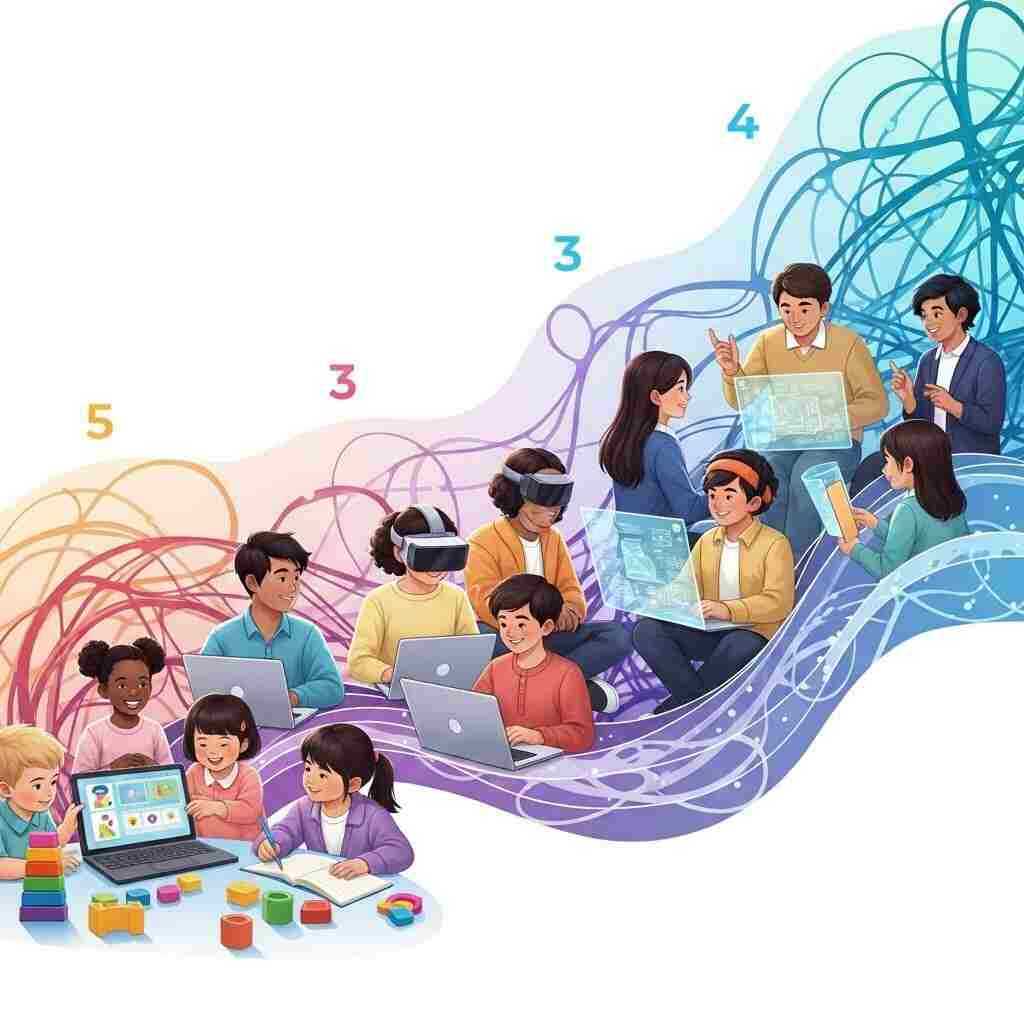
New Structure for a New Era
India’s National Education Policy 2025 has introduced the innovative 5+3+3+4 curricular structure, revolutionising school education and replacing the traditional 10+2 system. This updated model divides students’ learning journeys by developmental stages, focusing on individual growth. Leaders like those in Maharashtra and Karnataka have begun statewide implementation, while other regions prepare for the nationwide rollout, drawing global attention.
Age-Based, Child-Centric Learning
Unlike rigid grade divisions, the 5+3+3+4 system groups students by age and cognitive development: Foundation Stage ages between 3-8 delivers play-based learning and foundational skills, Preparatory Stage ages between 8-11 offers activity-based subjects to boost literacy and numeracy, Middle Stage ages between 11-14 promotes multidisciplinary education with coding and vocational skills, and Secondary Stage ages between 14-18 enables flexible, career-focused subject choices. This structure brings flexibility and global best practices to Indian classrooms.
Holistic and Tech-Enabled Classrooms
The NEP 2025 emphasises early childhood care, personalised curriculum, and life skills for every learner. Coding and artificial intelligence modules start from Class 6, and bilingual education transitions smoothly from mother tongue through Class 5 to broader language exposure by Class 8. Report cards now assess academics along with skills and personal development, ensuring a truly holistic learning experience.
Future-Ready Schools and Teachers
States such as Karnataka and Maharashtra are at the forefront, using new textbooks, digital learning platforms, and teacher training standards, NPST, to deliver the NEP’s promise. This flexible, skills-focused model lowers student stress and raises engagement, preparing Indian learners for real-world challenges. The NEP’s success is positioning India as a global example in child-centred, future-ready education.
Conclusion
India’s NEP 2025 and its new 5+3+3+4 curriculum are transforming how schools nurture young minds. By emphasising age-based learning, holistic skill development, and innovative digital tools, the policy ensures every child is prepared for future challenges. States leading this transformation demonstrate India’s commitment to a globally competitive, student-centred education system. With these updates, classrooms are becoming more relevant, engaging, and future-ready, creating a lasting impact for millions of learners across the country.
FOLLOW US ON:
INSTAGRAM: https://www.instagram.com/quizly.app?igsh=cWdrcXRmMXRidWJ2
YOUTUBE: https://www.youtube.com/@Quizlytalks