Latest NEET Syllabus Changes and Strategies for 2026
marketing team / Quizlyapp / Niroop chand

NEET 2026 brings transformative changes that every medical aspirant must understand. The National Testing Agency (NTA) has restructured the syllabus to align more closely with the NCERT curriculum while reducing coaching dependency. These changes aren't just cosmetic updates; they represent a fundamental shift in how the exam evaluates conceptual understanding versus rote memorisation. Students who adapt early will have a significant competitive advantage.
Leveraging Technology Intelligently
Digital tools transform NEET preparation when used strategically. Platforms like Quizly.app offer adaptive testing that identifies weak areas and customises practice accordingly. Telegram groups provide instant doubt resolution and resource sharing, though verify information quality before relying on it. YouTube channels by verified educators supplement textbook learning with visual explanations, particularly valuable for complex Biology processes and Physics concepts. Mobile apps enable practice during commute time or short breaks. Use digital tools for targeted practice and weak area improvement, not as primary learning sources.
Syllabus Simplification: What's Actually Changed?
The 2026 syllabus eliminates redundant topics while deepening focus on core concepts. Biology now emphasises integrated understanding across Botany and Zoology rather than compartmentalised learning. Physics reduces theoretical derivations in favour of application-based problems. Chemistry balances Physical, Organic, and Inorganic sections more evenly. The changes reflect real-world medical education needs, understanding mechanisms over memorising facts. NCERT textbooks become even more central, with approximately 85-90% of questions directly traceable to these books. This democratizes preparation, making quality study materials accessible to students regardless of their access.
Depth Over Breadth: Modern Study Strategies
Recent NEET toppers consistently emphasise quality over quantity. Instead of covering 50 topics superficially, master 30 topics thoroughly. This approach involves understanding each concept's "why" and "how," not just the "what." Create conceptual maps linking related topics, for example, connecting human physiology to disease mechanisms. Practice application-based questions that mirror the new exam pattern. Use previous years' papers from 2023-2025, as these reflect the transitional pattern. Avoid older papers that focused heavily on factual recall.
The Critical Role of Support Systems
Success in NEET 2026 isn't a solo journey. Teachers provide structured guidance and clarify complex concepts that self-study might miss. Parents offer emotional support and help maintain a healthy study-life balance. Study groups facilitate peer learning, and explaining concepts to others deepens your own understanding. Create or join small study circles (4-6 students) with serious aspirants. Weekly group sessions for discussing difficult topics, sharing resources, and mock testing together build accountability.
Time Management and Revision Strategies
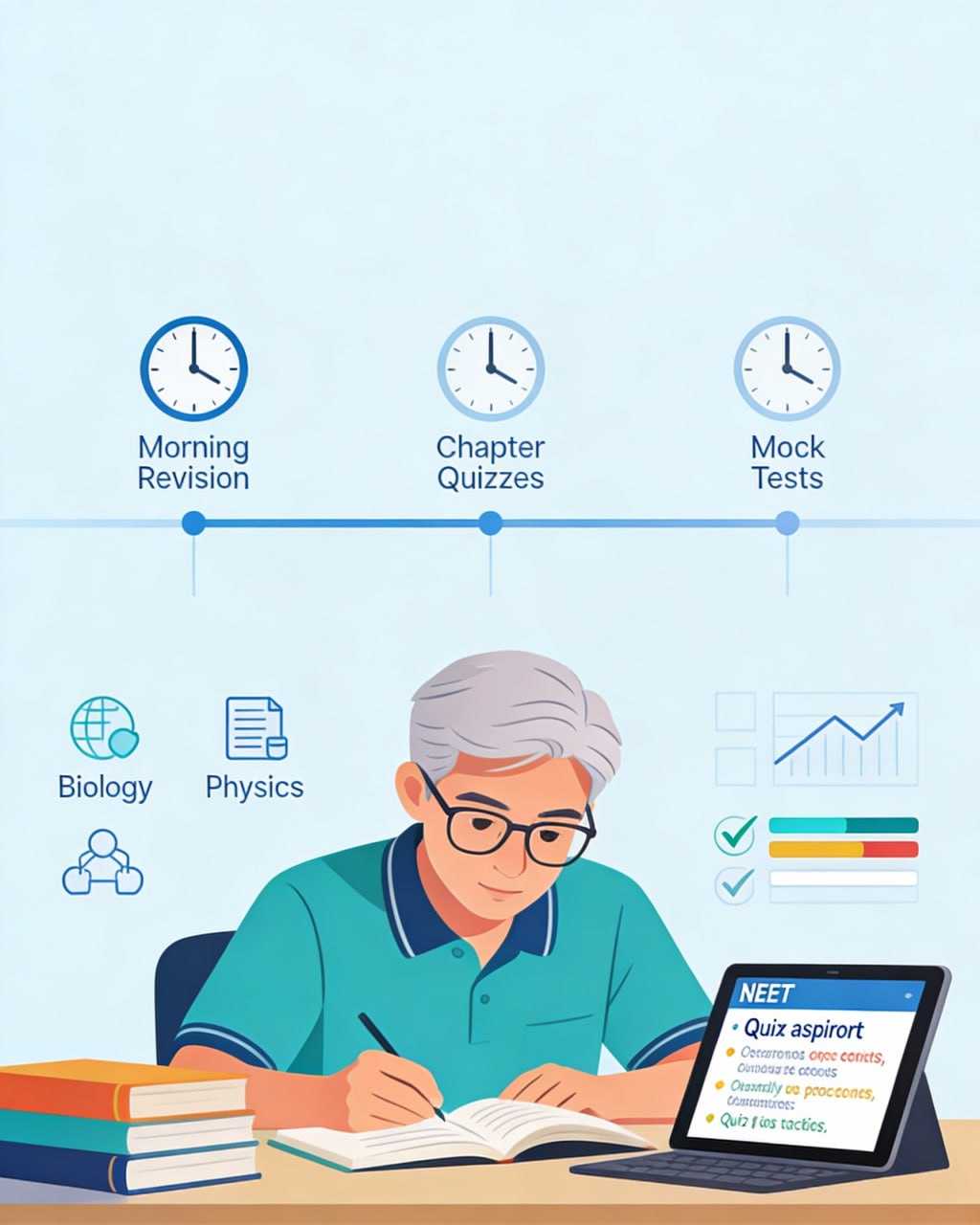
Create a realistic study schedule accounting for school, coaching, and personal time. Allocate more hours to weak subjects, but don't neglect strong ones. Biology demands the most time, given its vast syllabus. Use the first pass to understand concepts thoroughly, and subsequent revisions to reinforce and speed up recall. Implement spaced repetition review topics at increasing intervals (1 day, 3 days, 1 week, 2 weeks, 1 month). This scientifically proven technique maximises long-term retention. Maintain concise notes and flashcards for quick revision in the final months. Practice full-length mock tests monthly to build stamina and exam temperament. Analyse each mock test thoroughly; understanding why you got answers wrong is more valuable than celebrating correct ones.
Conclusion
The NEET 2026 syllabus change rewards conceptual clarity over memorisation. Early adaptation, NCERT mastery, strategic technology use, and strong support systems create the winning formula. Stay updated via official NTA channels, maintain flexibility in your approach, and remember consistent daily effort trumps last-minute cramming. Begin implementing these strategies today for maximum advantage.
FAQs
2. Should I discard old study material?Keep materials from 2023-2025 as core concepts remain unchanged. Supplement with updated NCERT editions and new pattern question banks. Discard coaching materials older than 3 years as they reflect outdated patterns.
3. How is the new pattern different from previous years?More scenario-based questions require analysis rather than direct recall. Integrated questions spanning multiple topics. Reduced straightforward factual questions greater emphasis on practical application and critical thinking skills.
4. Which subjects need extra focus after the update?Biology, Human Physiology, Genetics, and Ecology require a deeper understanding. Physical Chemistry needs stronger fundamentals. Physics demands more numerical practice. NCERT diagrams and explanations are now more critical than ever.
5. How do I track official syllabus notifications?Visit nta.ac.in regularly, subscribe to NTA email alerts, follow verified NTA social media accounts, join official Telegram channels, and utilise educational platforms like Quizly that provide curated updates and analysis of changes.
FOLLOW US ON:
INSTAGRAM: https://www.instagram.com/quizly.app?igsh=cWdrcXRmMXRidWJ2
YOUTUBE: https://www.youtube.com/@Quizlytalks
LINKEDIN: https://www.linkedin.com/company/quizly-learning/