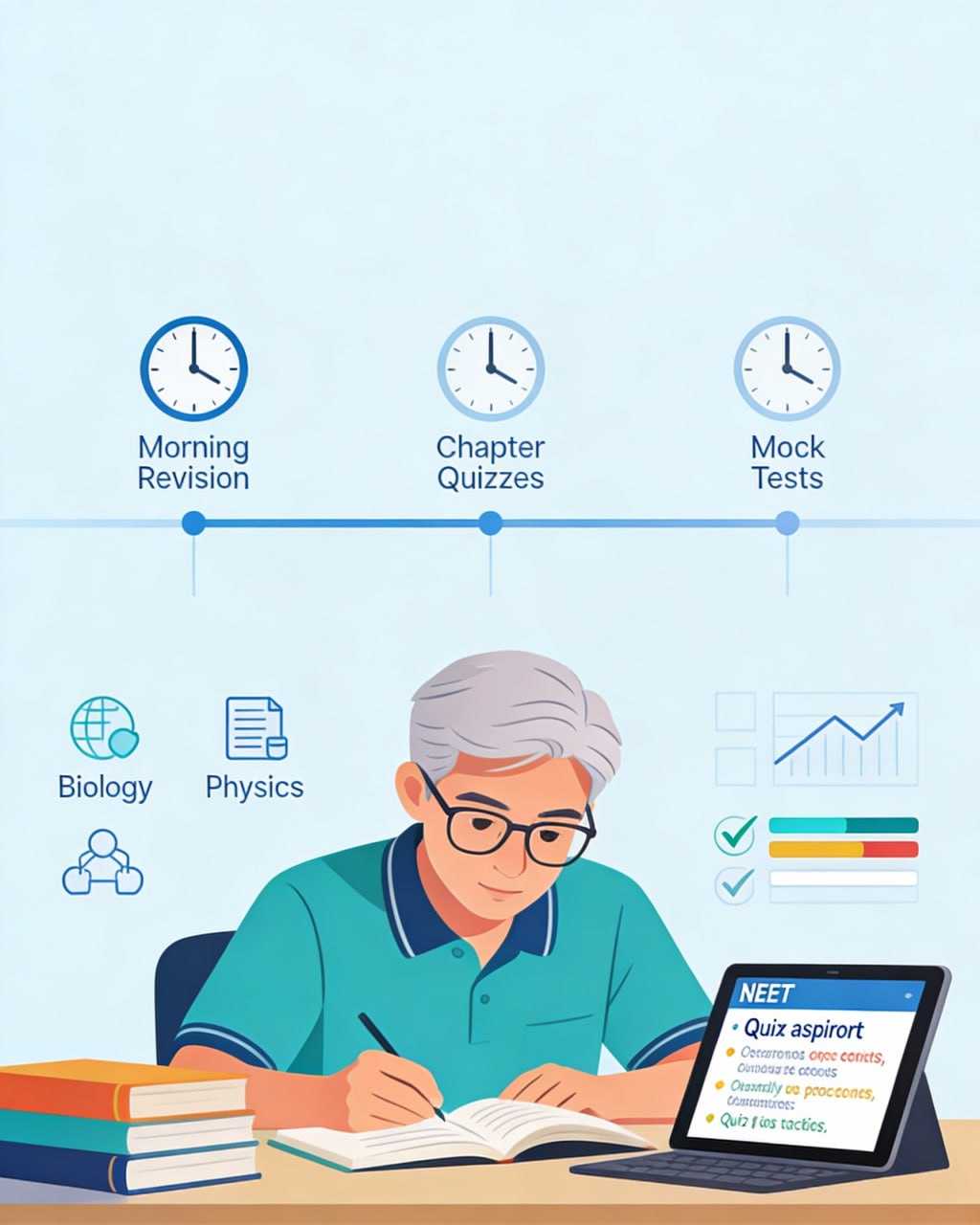
Top Viral Learning Techniques from Indian Toppers: What Works and Why
marketing team / Quizlyapp / Niroop Chand

Social media explodes every exam season with viral learning hacks from toppers, Feynman method, Pomodoro technique, spaced repetition. But which techniques genuinely work for Indian NEET/JEE aspirants? This article analyses what real toppers actually practice versus what gets viral attention.
Quality Over Quantity Approach
Indian toppers consistently emphasise focused learning over long hours. They identify weak topics through self-testing, create targeted revision schedules, and use structured flashcards for efficient memorisation. The key isn't studying 14 hours daily's studying smartly during peak focus hours. Surveys show toppers average 8-9 hours of effective study versus 12+ hours of distracted studying by average students.
Social Learning That Actually Works
Teach-Back Method: Explaining concepts to peers or even imaginary audiences reveals gaps in understanding. When you can teach something simply, you've mastered it.
Study Groups: Effective groups have 3-5 members, set clear agendas, assign topics beforehand, limit sessions to 90 minutes, and maintain accountability. Random group study often becomes unproductive socialising.
Competitive Accountability: Apps like Quizly offer leaderboards and peer comparisons that motivate without unhealthy competition.
Smart Study Tools Toppers Use
Pomodoro Technique: 25-minute focused study blocks followed by 5-minute breaks maintain concentration without burnout. After four cycles, take a 15-30 minute break.
Spaced Repetition Apps: Anki and similar flashcard apps use algorithms to show information right before you'd forget it, dramatically improving long-term retention.
Active Recall: Testing yourself repeatedly (not just re-reading) forces brain engagement. Practice tests outperform passive review by 250% in retention studies.
Blending Viral Trends with Proven Basics
Not every viral hack works for everyone. Toppers experiment systematically, trying techniques for 2-3 weeks, measuring results objectively, and keeping only what improves understanding or retention. They never abandon foundational habits: consistent schedules, NCERT mastery, previous year papers, and adequate sleep.
Conclusion
The best study method is the one that works for YOU consistently. Don't blindly follow every viral trend. Experiment systematically, measure results, and build your personalised system. True toppers combine trending techniques with disciplined basics, adapting strategies to their learning style rather than forcing themselves into others' systems.
FAQs
1. Which viral hack works best for NEET/JEE?The Feynman Technique (teaching concepts simply) is highly effective for understanding complex topics. Spaced repetition using apps like Anki dramatically improves long-term retention. Active recall (testing yourself rather than passive reading) is scientifically proven to be most effective. The Pomodoro Technique maintains concentration while preventing burnout.
2. Should I rely on social media study tips?Use with caution. Verify tips through credible sources, test before fully adopting, avoid time-consuming trends, be sceptical of "miracle shortcuts," and remember context matters—what works for one topper may not suit your learning style. Follow verified educators with proven track records, not just viral influencers.
3. Is group study actually effective?Yes, when structured properly. Benefits include exposure to different problem-solving approaches, peer teaching reinforces understanding, and accountability maintains consistency. However, unstructured groups often become unproductive. Set clear agendas, limit to 3-5 focused members, assign preparation beforehand, and maintain time discipline for maximum benefit.
4. How much time should I dedicate to "smart" learning?Focus on effectiveness, not hours. A quality study with active techniques (testing, teaching, problem-solving) doubles the time in passive review. Most toppers study 6-8 hours effectively with breaks, rather than 12+ hours of distracted reading. Track your productive hours honestly. Quality always trumps quantity.
5. Which hacks help with last-minute revision?For final weeks: Focus on active recall through practice tests, use flashcards for rapid concept review, create one-page summary sheets per chapter, practice previous year papers under timed conditions, prioritise high-weightage topics, get adequate sleep (no all-nighters), and avoid learning new concepts reinforce existing knowledge.
FOLLOW US ON:
INSTAGRAM: https://www.instagram.com/quizly.app?igsh=cWdrcXRmMXRidWJ2
YOUTUBE: https://www.youtube.com/@Quizlytalks
LINKEDIN: https://www.linkedin.com/company/quizly-learning/