The Science of Student Motivation: Intrinsic vs Extrinsic Rewards in the AI Era
marketing team / Quizlyapp / Venkateswar rao
What is student motivation?
Student motivation is the internal and external energy that drives a learner to start, continue, and complete learning tasks. It influences how much effort students put in, how long they persist when work is hard, and whether they focus on deep understanding or just “finishing homework.”
Intrinsic motivation: learning from the inside
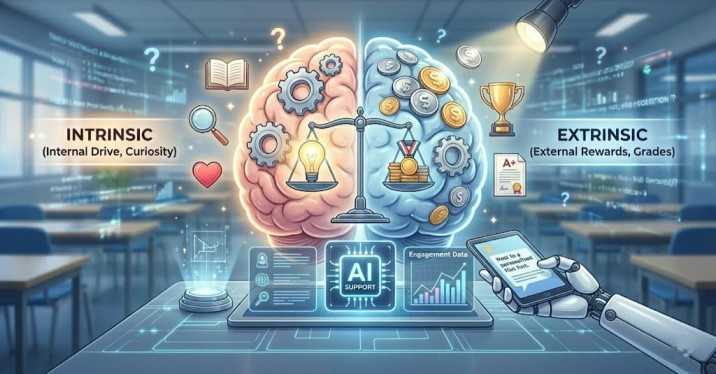
Intrinsic motivation comes from within the student: curiosity, interest, enjoyment, and a sense of challenge or purpose. Intrinsically motivated students are more likely to explore topics beyond the syllabus, ask questions, and use deep learning strategies rather than memorising for tests.
Extrinsic motivation: rewards, marks, and pressure
Extrinsic motivation is driven by external outcomes like grades, certificates, prizes, parental approval, or fear of punishment. In many school systems, students study hard primarily to score well in exams, secure admissions, or avoid criticism, even if they do not enjoy the subject itself.
What research says about intrinsic vs extrinsic rewards
Motivation and student mental health
Self-determination theory: the science behind student motivation
Self-directed learning as a motivation booster
How AI is transforming student motivation
AI-powered tools can now track student motivation and engagement in real time by analysing patterns such as response accuracy, speed, log-in frequency, and interaction style. When systems see that a learner is disengaged or stuck, they can adjust task difficulty, change question types, or offer hints and encouragement automatically.
Real-time AI data for teachers and platforms
Modern AI dashboards give teachers a live view of which students are thriving, who are losing motivation, and where learning gaps are forming. Instead of waiting for term-end exams, educators can intervene early with personalised support, counselling, or adjusted tasks to rebuild student motivation.
Designing intrinsic-friendly classrooms and apps
To support intrinsic student motivation, teachers and product designers can create tasks that are meaningful, challenging, and connected to real-life problems instead of only drill questions. Choice boards, project-based learning, student-led discussions, and inquiry tasks give learners more ownership and autonomy.
Using extrinsic rewards without killing intrinsic drive
FAQs
Q2. Which is better for learning: intrinsic or extrinsic motivation?Intrinsic motivation is stronger and more lasting, but balanced extrinsic rewards can still support effort and engagement.
Q3. How does self-directed learning improve student motivation?It gives students more control and choice, helping them connect learning to their interests, which boosts intrinsic motivation.
FOLLOW US ON:
INSTAGRAM:https://www.instagram.com/quizly.app?igsh=cWdrcXRmMXRidWJ2
YOUTUBE:https://www.youtube.com/@Quizlytalks
LINKEDIN:https://www.linkedin.com/company/quizly-learning/